
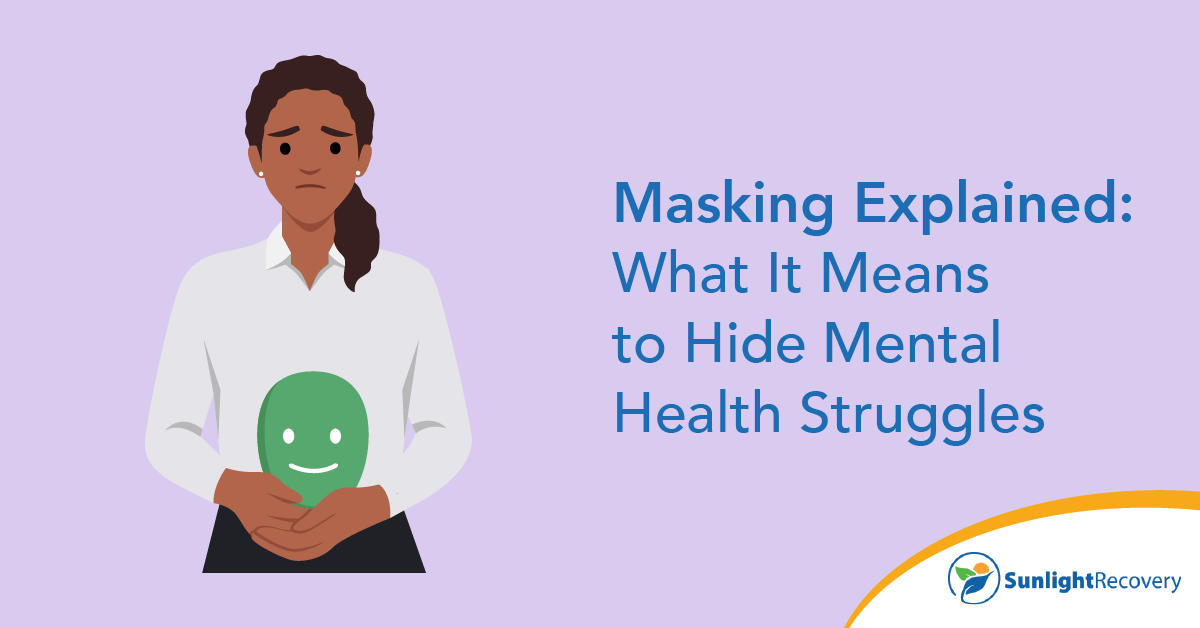
Masking, sometimes called camouflaging, is when a person hides their true thoughts, feelings or behaviors to fit in socially. It can occur at work or school and in personal relationships. While it’s common to sometimes adjust how you act in different settings, masking is constant and can seriously impact your mental health and well-being. Learning what masking means in psychology helps you recognize when you’re suppressing your true self and why seeking support matters.
What Is Masking in a Mental Health Context?
The formal masking definition is the conscious or unconscious process of hiding your genuine thoughts, feelings or symptoms of a mental health condition to conform to social expectations. You hide your real emotions, personality or struggles to seem normal to others, either on purpose or without realizing it, to avoid judgment, rejection or negative outcomes.
In psychology hiding can look different from person to person. Someone might smile and joke when they’re having a hard time, downplay their problems when asked how they’re doing or carefully watch how they act so they fit in. People who mask often feel as though they’re playing a role instead of being themselves, impacting their mental health.
Masking can occur with various mental health conditions. Someone might cover depression with constant cheerfulness. A person with anxiety may look calm on the outside while feeling panic inside. People living with substance use disorders may develop elaborate ways to conceal their struggles from loved ones. However, masking is particularly significant in neurodivergent groups.
Common Reasons People Feel Pressured to Mask
Many things can make someone feel they have to hide who they really are. Understanding these pressures helps explain why masking can be considered a survival strategy.
- Fear of stigma. Mental health conditions still carry significant stigma. People worry about revealing their struggles because others may see them as weak, unstable or incapable.
- Desire for acceptance. People naturally want to feel they belong. When someone believes their true self won’t be accepted, masking may seem like the only way to maintain relationships.
- Cultural norms. Some cultures emphasize harmony and putting the group first over individual expression. In these settings, masking can become the expected way to keep the peace and avoid burdening others with personal problems.
- Past negative experiences. Previous rejection, bullying or having your feelings dismissed after opening up can teach you it’s safer to hide. Over time, these experiences result in a masking habit, which feels safer than being honest.
- Workplace expectations. Employees often feel pressure to appear competent and positive at work regardless of internal struggles. They may fear admitting to a mental health issue could threaten their job security or future promotions.
Many people seek work environments where they’re allowed to be themselves without fear. According to the American Psychological Association’s 2023 Work and Well-Being Survey, 92% of respondents want to work for organizations that support employees’ mental health and cared about their psychological and emotional well-being.
How Masking Affects Neurodivergent and Marginalized Groups
While masking can affect many people, certain groups face more pressure to hide their authentic selves.
Neurodivergent people, especially those with autism, often develop masking strategies to blend in. They learn to hold back natural stimming behaviors, such as rocking or hand-flapping, make eye contact or mimic social scripts. Essentially, they force themselves to act in neurotypical ways even when it’s uncomfortable or mentally and emotionally draining.
LGBTQ+ individuals may mask their identities in unsupportive environments. Masking might involve hiding relationships, changing how they act or staying silent when someone makes discriminatory comments.
People of color in predominantly white spaces may feel pressure to code-switch, meaning they change how they speak or act. Downplaying cultural aspects of their identity is a form of masking used to reduce the risk of discrimination. However, it can leave them feeling conflicted internally.
Someone with invisible disabilities or chronic conditions may mask their pain or limitations to avoid having to explain themselves or face disbelief. They may push through symptoms to appear capable, which can worsen their physical condition.
Emotional and Physical Consequences of Prolonged Masking
Over time, masking can seriously affect your overall health. The adverse effects of maintaining an artificial version of yourself can manifest in various ways:
- Increased anxiety and depression. Constantly watching what you say and do creates stress. When the way you act doesn’t match how you feel, it can cause loneliness and hopelessness.
- Emotional exhaustion. Masking takes constant effort. Many people feel wiped out after social interactions and need extensive alone time to recover.
- Identity confusion. Long-term masking can blur the line between who you are and who you pretend to be. You may eventually lose touch with your own preferences, feelings or personality traits.
- Physical health impacts. Chronic stress from masking can cause you to get sick more often or have headaches, digestive issues or sleep disturbances.
- Relationship difficulties. An authentic connection needs honesty and vulnerability. If you’re always masking, relationships can remain superficial, and you may feel lonely even with people you love.
- Delayed help-seeking. When masking works too well, others don’t see you’re struggling and can’t offer support. You might also become convinced your problems aren’t serious enough to need mental health care.
How to Recognize If You’re Masking
Noticing when you’re masking is the first step toward change. The following signs may mean you’re hiding your real self:
- Feeling worn out after participating in social situations others find fun
- Rehearsing conversations in your head a lot
- Worrying about what you said long after conversations end
- Noticing you act very differently in private versus public situations
- Minimizing your struggles when someone asks how you’re doing
- Feeling as though you’re playing a role instead of being yourself
- Feeling a sense of relief when you’re alone because you can drop the act
- Going along with what others want all the time
- Feeling as though people don’t really know you
- Noticing tension, headaches and fatigue are worse in social situations
Creating Safe Spaces for Authentic Expression
Reducing masking takes personal effort and support from those around you. Start small by sharing your true thoughts and feelings with people you trust and see how they respond. Over time, it can help you see the rejection you fear doesn’t always happen.
Other ways to create safe spaces include:
- Practicing self-compassion
- Identifying safe, supportive relationships
- Setting clear boundaries
- Advocating for inclusive environments
Seeking Professional Support
Therapists can help you understand your masking patterns, work through your underlying fears and develop healthier coping strategies. At Sunlight Recovery, we understand how hiding mental health struggles takes an enormous toll. Our compassionate team creates a judgment-free environment where you can explore your authentic self without fear. Contact Sunlight Recovery to stop masking and start healing through evidence-based treatments tailored to your unique needs.