
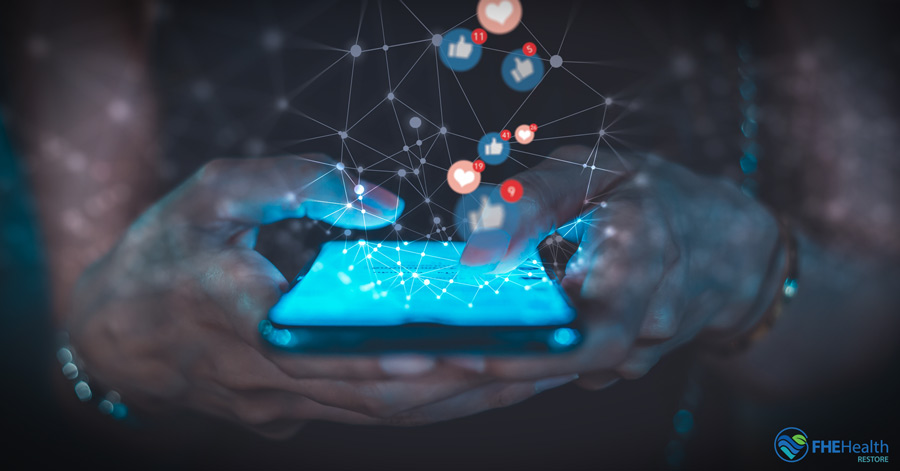
Social media algorithms are designed for one purpose: to keep us engaged and coming back for more. The constant interaction and real-time feeds trigger the release of the feel-good chemical in our brains — dopamine. This chemical is released whenever we receive interactions such as likes, comments and “buy-in” validation like reposts. Constant exposure can lead to addictive behaviors as our brains become accustomed to the flood of dopamine, even triggering withdrawal symptoms without it. This cause-and-effect is why staying informed about the link between social media algorithms and mental health is crucial.
A 2025 Pew Research Study found that as many as 84% of adult Americans used some form of social media at some point in the year. This widespread adoption impacts the way we view the world and influences how we treat others and ourselves. Programmed to primarily display things that make us feel good and intelligent, algorithms sort users into effective echo chambers that fail to challenge our thinking and biases. These curated feeds also serve up idealized pictures and posts of others’ lives, leading to constant negative comparisons, judgment and unhealthy envy.
What Is a Social Media Algorithm and How Does It Work?
In 2025, West Virginia University defined social media algorithms as “digital guards, working behind the scenes to determine which posts, tweets, and updates make it onto your feed.” In layman’s terms, they are a set of parameters used to rank content on platforms such as Instagram, TikTok and Twitter based on likely user interest and engagement patterns. In theory, these algorithms give each user a personalized experience by feeding them the content they want. But in reality, they also serve to confirm existing biases and create a stilted and myopic worldview.
For instance, Instagram’s algorithm prioritizes content from accounts a user has previously engaged with. This has some benefits, but it can also prevent users from branching out and exposing themselves to new ideas and people. TikTok’s algorithm looks at a user’s engagement and uses the data to feed personalized content to a “For You” page that appears when the app is opened. Twitter’s algorithm is ever-evolving in light of Elon Musk’s 2022 acquisition of the company, but primarily works by boosting or suppressing posts based on how much interaction they receive.
These algorithms might seem to make platforms more enjoyable and useful by giving users the content they’d otherwise have to seek out on their own, but they’re a double-edged sword. They can also lead to problems, both for marketers trying to push content and for the users consuming that content. Because of the minute, real-time adjustments of social media feeds, marketers are incentivized to “game” the algorithm using attention-grabbing tactics rather than being genuine and authentic. This leads to overstimulation, emotional manipulation and other negative practices being used as standard tools for marketing messages.
The Dampening Effect of Echo Chambers
Social media algorithms can have a negative impact on users by creating filter bubbles and echo chambers that reinforce existing biases and deepen polarization. In a 2025 article in the Daily Utah Chronicle, journalist Teetad Govitviwat notes echo chambers have become even more problematic in the wake of social media platforms discontinuing fact-checking protections.
With the rise of AI-powered misinformation and images, people have become more deeply entrenched in their political “teams” online, viewing opposition with increasing wariness or even animosity. In the worst cases, this can lead to outright violence, such as rioting. Echo chambers can also amplify existing prejudices by reinforcing negative stereotypes and implicit biases about groups outside the chamber.
Social media users can counteract these negative effects simply by being aware of them and making a concerted effort to seek out different ideas and perspectives. Media companies themselves can do their part by tweaking algorithms to purposefully expose users to diverse content and viewpoints, but often neglect to do so, as it is seldom profitable.
Social Media and Mental Health: Self-Esteem
Social media can be disastrous for self-esteem, especially in adolescents and preadolescents. The constant exposure to idealized online personas, many of which only show the high points of people’s lives and eschew the lowlights, can lead to feelings of inadequacy. When users compare themselves to “influencers” and other glamorized personalities on social media, they can develop negative body images, low self-esteem and FOMO (fear of missing out). This can lead to mental health issues, which psychiatrists have seen a significant uptick in among young people in the social media era.
Even worse, the algorithms can create a vicious cycle by showing users more content related to their struggles, which serves to deepen their feelings of inadequacy. Social media users should keep in mind that these platforms present a distorted view of reality that rarely matches people’s actual day-to-day existence.
Effects of Social Media Algorithms on Mental Health
Just how harmful is social media? In excess, it’s extremely detrimental to people’s mental health. It can lead to anxiety, depression and decreased life satisfaction. For users with existing mental health problems, social media can exacerbate them by producing feelings of loneliness and isolation. It can also disrupt sleep patterns, leading to memory loss and cognitive decline.
These problems are compounded, particularly among young users, when bullying and other antisocial behavior take place online. Unlike with schoolyard bullying, young people don’t get a reprieve when the bell rings at the end of the day. When humiliating information or pictures are posted on social media, a person can’t even escape it by moving to a new town or a new state. This can lead to feelings of hopelessness and despair. That’s why it’s important for adults to stay aware of the frequency and specific uses of social media when it comes to their children. Limiting and guiding their consumption before a social media meltdown occurs can avoid these stigmas and promote a healthier relationship with technology and social media.
How Is Social Media Harmful, and How Can You Take Control?
Managing social media use can be challenging, but it’s important to prioritize self-care and set boundaries to maintain a healthy relationship with technology. So how can you use social media to improve your life without damaging your mental health?
- Curate your online environment. Follow accounts that inspire and uplift you. Avoid those that bring negativity or stress into your life or hold up unrealistic expectations as a point of comparison.
- Set time-based boundaries. Avoid scrolling through social media first thing in the morning, during mealtimes or just before bed. These are the time periods where your brain needs space to start up, focus or wind down, and exposure to intense emotional stimuli can disrupt your well-being.
- Prioritize self-care offline. If you need to de-stress, try focusing on an activity or craft away from screens rather than scrolling. This will help avoid a self-soothing cycle of social media consumption, ensuring you are only engaging with it consciously and thoughtfully.
If social media has negatively impacted your mental health, you might benefit from talking to a professional counselor. Restore Mental Health can help. Contact us today to get in touch with one of our compassionate team members.