
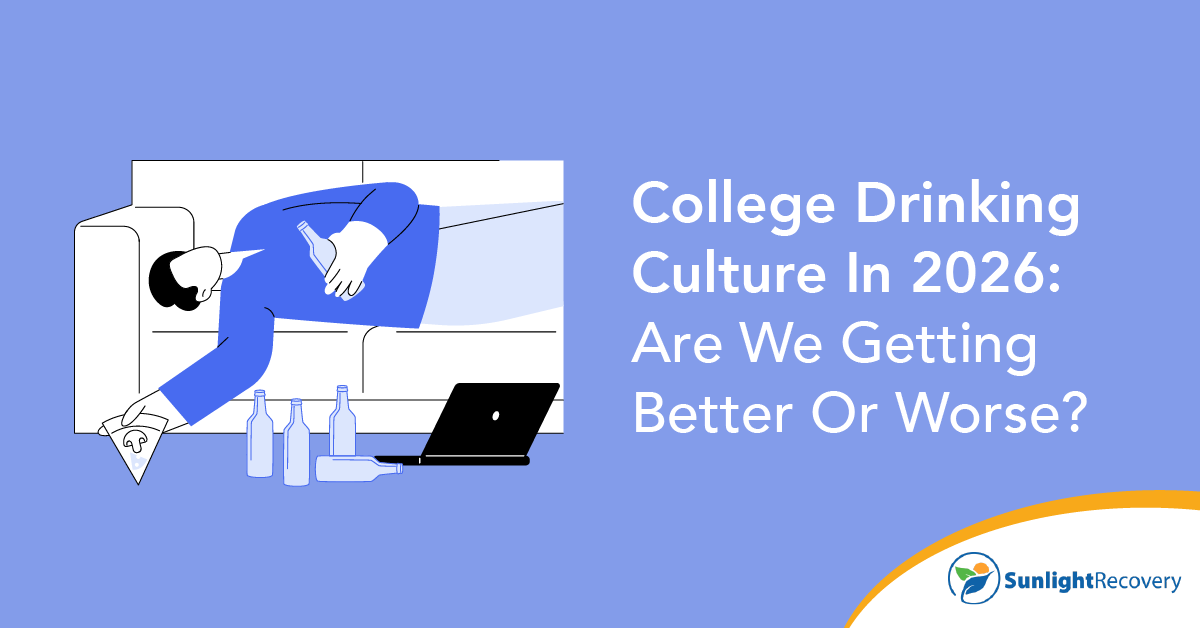
Binge drinking and college students have been associated for many decades. College is a time when young people move away from home, are unsupervised and have easier access to alcohol, so they often begin to consume it regularly. But is binge drinking still the norm? Let’s look at the latest college drinking statistics.
Current Trends in College Drinking Habits
Decreased alcohol consumption has been the trend for a while. Over the past 2 decades, the drinking rates of young adults aged 18 to 34 declined from 72% to 62%. In addition to fewer young people drinking, younger people are now unlikely to drink to excess, according to self-reporting.
In particular, Gen Z is drinking less alcohol than previous generations. The trend is so dramatic that music venues are reporting drops in alcohol sales at concerts. A 2020 study tracked a noticeable decrease in college drinking over almost 2 decades, and 28% of college students reported abstaining from alcohol. Sixteen years earlier, only 20% abstained.
Binge Drinking and College Students: The Influence of Social Media, Wellness Culture and Harm Reduction
College kids and younger people are choosing to drink less for many reasons. Theories regarding the cause of this trend include:
- Mental health awareness. Members of younger generations are more attuned with their mental health challenges than ever before, and it’s increasingly common knowledge that alcohol isn’t beneficial for someone struggling with mental health. Compared to previous generations, young people today are more interested in getting a diagnosis and prioritizing their mental health treatment. Addiction psychiatrist Dr. Akhil Anand says, “Alcohol is a depressant and never the answer to a bad day. Gen Z seems to understand that concept and has moved in a different direction.”
- Wellness culture. Overdrinking used to earn young people a badge of honor, but that’s less true now. A shift toward wellness culture has also occurred. It’s now considered cool to take care of your mind and body. Working out, eating healthy and reducing drug and alcohol use are seen as commendable at any age.
- Social media. Social media can be a deterrent to overdrinking. These days, if you drink too much in a social setting and do something embarrassing, someone could record it and post it on social media.
- Marijuana. Some evidence suggests college kids are simply replacing drinking with marijuana usage now that the substance is legal across many states. The 2023 National Survey on Drug Use and Health found 36.5% of adults aged 18 to 25 consumed marijuana in the past year, so usage rates are high.
- Cost. Younger generations today are dealing with an extreme cost-of-living crisis. Alcohol is an easy expense to leave out of your budget when you have limited funds.
- Education and knowledge. Thanks to the internet and social media, more college kids today understand the negative outcomes of drinking alcohol, which can motivate them to drink less.
- Generational influence. As each generation drinks less, it naturally affects the next. The 2021 National Survey on Drug Use and Health found many students chose not to drink because of parental influence. Sober parents, or parents who drink infrequently, talk to their children about the harmful impacts of alcohol, and that has a lasting impact on their kids’ views towards drinking.
Are Students Drinking Less — or Just Drinking Differently?
College kids haven’t all become sober; many are still drinking. How many college students binge drink? The 2021 survey showed 49.3% of full-time college students aged 18 to 22 had drunk alcohol in the past month. Of those, about 27.4% of students engaged in binge drinking during that same time frame.
Still, the noticeable — and positive — change is that college kids are drinking less overall. Binge or excessive drinking is down too.
The Ongoing Risks: Binge Drinking, Blackouts and Alcohol Poisoning
As drinking still happens on college campuses, young people must understand the potential adverse outcomes of alcohol:
- Binge drinking is defined as consuming a large amount of alcohol in a short time period. This translates to five or more standard drinks for a male and four or more drinks for a female within a 2-hour time frame. Someone who frequently binge drinks is at a high risk of developing serious health problems.
- Drinking excessively can lead to blackouts, where the individual is unaware of what they’re doing and doesn’t know what’s happening. Blackouts can cause the person to make dangerous decisions, such as drinking and driving, trusting the wrong people, falling or passing out in dangerously cold climates.
- Alcohol poisoning can occur when people drink more than their bodies can handle. It comes with potentially fatal health risks.
- Alcohol is addictive, and an alcohol use disorder can develop when someone drinks too much.
- College kids who drink are at a higher risk of experiencing sexual assault.
Mental Health Implications of College Drinking Norms
Since college kids are frequently exposed to drinking, especially drinking to excess, this behavior can start to feel normal. But routines and habits developed in college can carry over into the rest of your life. If you spend your college years overdrinking, you can graduate with an unhealthy relationship with alcohol or even an alcohol addiction.
How Schools and Students Can Shift the Culture
Students can hold each other accountable for their drinking patterns. Outside of college, one of the biggest motivators for people to get sober is their loved ones. Sometimes it takes intervention by a friend or family member for an individual to realize they have a drinking problem.
Schools also have a big role to play in helping college kids understand the risks of drinking. Resources and support should be available to students on campus and online, including educational content, links to support groups and contact information for mental health support.
Schools must also update their approach as the landscape changes with the uptick in marijuana usage. Experts recommend that, beyond alcohol, colleges should educate students on polysubstance use, marijuana use disorder and prescription drug misuse. These are very real risks for college kids today.
Addiction Treatment at Sunlight Recovery
You don’t have to overcome a substance abuse addiction on your own — help is available. Sunlight Recovery is a professional addiction treatment center helping people live a better tomorrow. We offer inpatient treatment and outpatient care and can provide medical detoxes. Contact us today to learn more.