
When you see track marks on someone’s body, it’s a possible sign that they’re injecting substances, such as meth or heroin. More than 3.6 million people in the country inject drugs — around 1.5% of the population, making this a concern for many. For a person with a substance abuse disorder, track marks from drug use can be a painful reminder of their situation. Fortunately, rehab programs like those offered at Sunlight Recovery can help them successfully recover from their addiction.
What Are Track Marks, and What Causes Them?
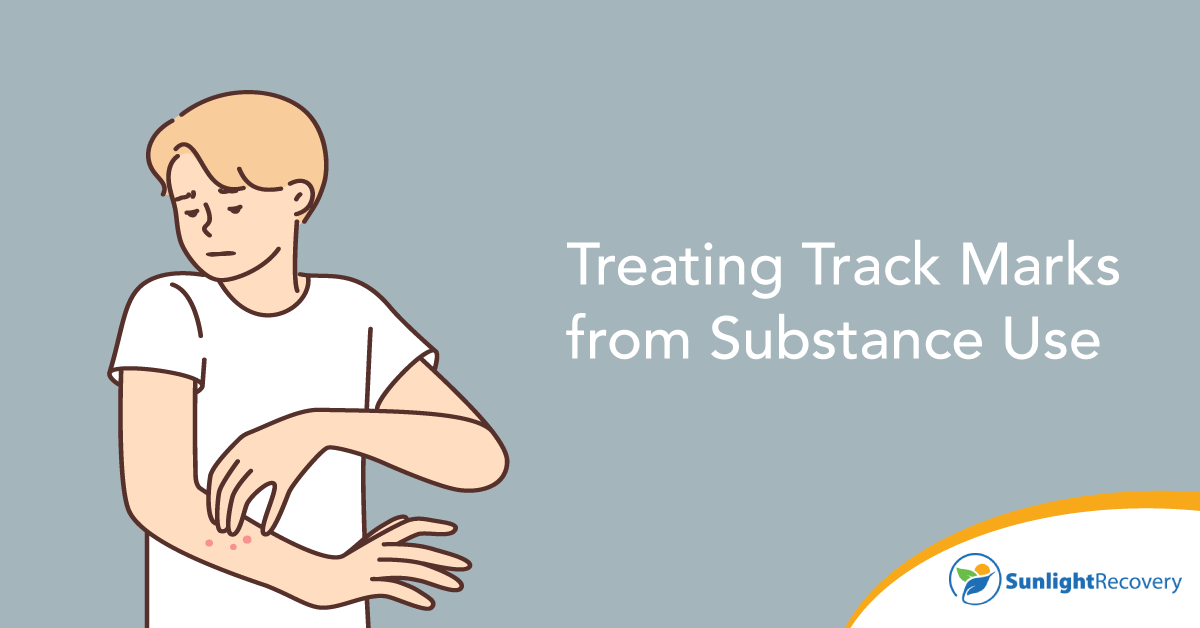
Track marks are the puncture wounds and related scarring that injecting drugs causes. Initially, the wounds may look pink or red with an obvious puncture in the middle. Over time, healing track marks may appear as bruises or lesions, with blue, black, purple or brown coloring around the site. Eventually, old track marks can appear as discoloration or as puckered and textured scars on the skin, especially if the same site was used for injections repeatedly.
What Do Track Marks Look Like?
In the early stages, track marks might be subtle, but they usually become more prominent after weeks or months of regular substance abuse. Signs of intravenous (IV) drug use include:
- Small punctures
- Scars
- Bruises
- Dark veins
- Sores and scabs
- Soot marks
- Clusters of marks around veins
Where Are Track Marks Commonly Found?
Typically, the most common area for track marks is on the arm. The inner arm, especially near the crook of the elbow, is an easy place to reach and affords fairly effortless access to veins. This makes it a location of opportunity for many people who struggle with a drug addiction.
However, drug scars and track marks may also appear on other parts of the body, including the legs, neck, hands or feet. Eventually, the area on the arm or any other part of the body that’s been injected multiple times may become too painful. This can cause someone to move to another area of the body for injecting drugs. In cases where someone is trying to hide the signs of their drug use, they may inject in areas others won’t ever see, such as under the clothing or even between the toes.
Which Drugs Are Associated With Track Marks?
If you’ve seen what you think are track marks on someone you love, you might wonder what it means — specifically, what type of drug abuse they might indicate. Some drugs associated with injection sites include fentanyl, heroin, morphine, cocaine, methamphetamine and even prescription drugs, which can be crushed and dissolved in liquid to create an injectable substance.
What Are the Signs of IV Drug Use?
Aside from the distinct needle marks on arms, injecting drugs has a wide range of side effects. Possible signs of IV drug use include:
- Confusion
- Irritability
- Mood swings
- Fatigue
- Tremors
Likewise, using needles could lead to health complications. Injecting drugs with a dirty needle may cause a bacterial or fungal infection, wound botulism, endocarditis or necrotizing fasciitis.
Clean needles can be just as dangerous. Repeatedly injecting in the same site could cause a vein collapse, while missing the vein or injecting into a dirty site may lead to painful abscesses. Injecting particles into the vein could block the blood flow, resulting in serious complications and even death.
Treatment Options for Track Marks From Drug Use
Healing drug scars can be important to someone as they seek recovery. The evidence of visible wounds can be an unwelcome reminder or even a trigger for someone who’s working to live a sober life, and someone in recovery may worry that their track marks could lead to others judging them. It might also be meaningful to see track marks healing, as it can indicate the length of time it’s been since someone last injected drugs — a physical reminder of how far the person has come in recovery.
Immediate Treatment Options
Immediate treatments typically address actual wounds and infection risks. Wound care, including cleaning and treating wounds with topical agents, is common. In a clinical setting, caring providers may offer guidance on how to keep the area clean and treated as injection puncture wounds heal. They may also provide topical medications and information about diet and other factors that can help promote healthy, healing skin.
Some immediate treatment choices may be made to reduce the appearance of long-term scarring. In some cases, creams or other topical options may be applied to new track marks to help the skin heal more fully and minimize scarring. Ice can help reduce the bruising that may follow injections.
Long-Term Treatment Options
Options for healing track marks in the long term are somewhat limited. Protecting the area with sunscreen when you’re outside and using high-quality moisturizers and other skin care products can help reduce the appearance of scars. In some cases, laser procedures can help address pigmentation issues from track marks, and in extreme circumstances, plastic surgery may help with some scarring.
Preventive Measures for Harm Reduction
Not all intravenous injections are related to substance abuse, and even when they are, there are some steps people can take to reduce track marks and other, more serious potential harm. It’s critical to use clean needles, for example, to reduce the risk of complications such as infection. Cleaning any injection site first with alcohol prep pads is also a good habit, and not using the same site to inject medications all the time can allow areas to heal properly before you inject in that place again.
Of course, if you’re caught in a cycle of abusing drugs in any way, including injecting them, the best preventive measure against future harm is to seek addiction treatment at a facility like Sunlight Recovery.
Frequently Asked Questions
- What Do Track Marks Look Like?
Track marks can look like bruises, scars, sores, dark veins and small puncture wounds. It’s common to see multiple track marks around a single vein. - What Causes Track Marks?
Track marks appear when an individual uses a needle to inject substances, such as meth or heroin, directly into their veins. - Where Do Track Marks Appear?
Injection sites can be anywhere on the body, but they typically appear on the arms, legs, neck, groin or feet. - Do Track Marks Heal?
When an individual stops injecting substances, the track marks will eventually fade. Some scarring might remain after prolonged use.
Psychological Support for Recovery and Healing
At Sunlight Recovery, we provide holistic support for recovery and healing. If you or someone you love is struggling with a substance abuse disorder, we can help. Our programs, which include inpatient and outpatient care as well as medically assisted detox, are designed to provide a safe, secure place for individuals to recover. Contact Sunlight Recovery today to learn more about your treatment options.