

Quick answer: SSRIs can cause emotional blunting — including reduced motivation and apathy — in an estimated 40–60% of people who take them. These effects are often temporary and may ease if a doctor adjusts the dose.
How do antidepressants make you feel? This medication can help diminish the constant feelings of dread, despair, hopelessness and sadness that often come with depression. However, many people are unaware that antidepressants can also lead to something known as emotional blunting. One of the most commonly reported side effects of using antidepressants (typically selective serotonin reuptake inhibitors, or SSRIs) is feeling “flat” and unmotivated. Unfortunately, the link between antidepressants and lack of emotion leads some people to reduce their dosage or stop taking their prescription altogether.
So, do antidepressants help with motivation or disrupt it? This side effect is a significant concern or even a deterrent for people starting this type of medication, as well as an obstacle to continuing a prescription. In this article, we’ll describe what that flat sensation is, what causes it and how likely it is if you take antidepressants.
What Is Depression?
Depression is a mental illness that makes it difficult for people to find happiness and fulfillment in life. Common symptoms include feeling sad, empty and hopeless, a loss of interest in activities, a decrease in self-esteem and a lack of motivation. Treatment is essential for depression as it doesn’t just go away. The two main types of treatment are medication and therapy, with many people needing a combination of both.
While depressed people often feel that nobody understands their pain, the National Institute of Mental Health (NIMH) estimates that in 2021, 8.3% of adults in the United States had at least one major depressive episode. Within that group, 61% received treatment for their condition. These findings show that, despite the stigma, depression is a common disorder that leads many people to seek care.
How Do Antidepressants Make You Feel?
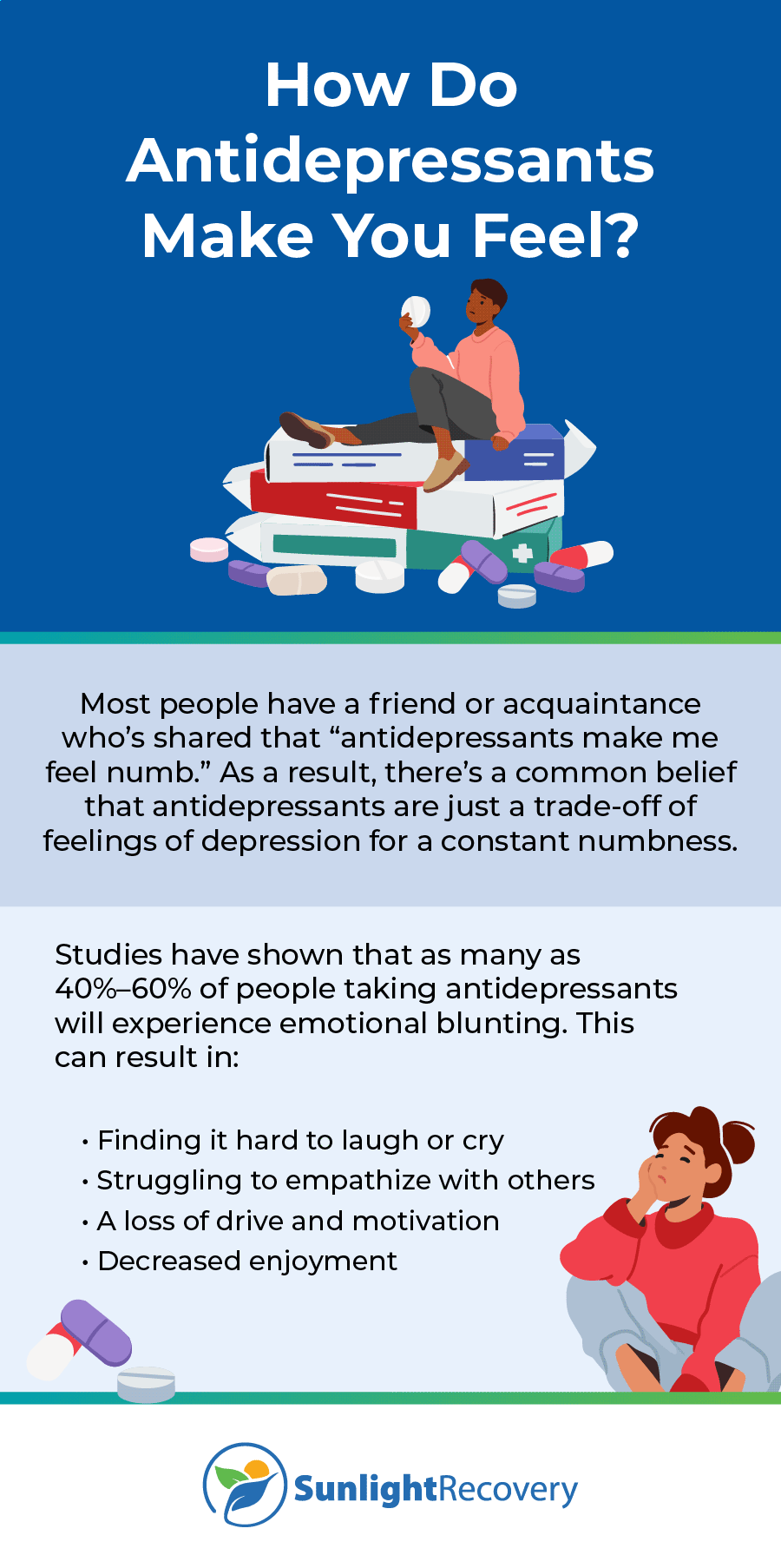
Most people have a friend or acquaintance who’s shared that “antidepressants make me feel numb.” As a result, there’s a common belief that antidepressants are just a trade-off: You trade feelings of depression for constant numbness.
Studies have shown that as many as 40% to 60% of people taking antidepressants experience emotional blunting. While this doesn’t happen to everyone, some people experience these symptoms when they start taking a new medication:
- Finding it hard to laugh or cry
- Struggling to empathize with others
- A loss of drive and motivation
- Decreased enjoyment
Since these symptoms tend to mimic depression, patients may start to wonder why they’re taking antidepressants at all. Some might even admit that they preferred the mood swings they experienced before. Unfortunately, depression is more harmful in the long run, with major depressive periods increasing the risk of self-harm or suicide attempts.
What’s the Link Between Antidepressants and Lack of Motivation?
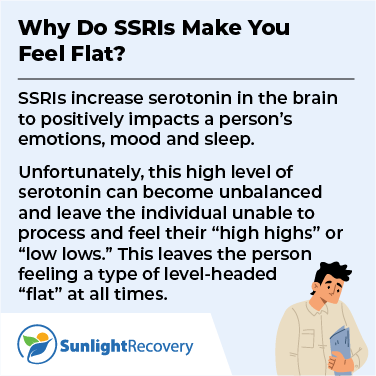
The most commonly prescribed antidepressants are SSRIs. These work by increasing the levels of serotonin in the brain, a messenger chemical that transfers signals from nerve cells to the brain (also known as neurotransmitters). This valuable chemical positively impacts a person’s emotions, mood and sleep.
After relaying a message, the body typically reabsorbs serotonin into the nerve cells in a process known as reuptake. SSRIs inhibit, or block, this reabsorption. This means more serotonin can continue to pass messages to nearby cells, which keeps serotonin levels high.
Unfortunately, SSRIs can sometimes be too effective. The level of serotonin can become unbalanced and leave the individual unable to process and feel their “high highs” or “low lows.” So, while they help people not feel depressed, SSRIs can also stop people from feeling their highs (laughing, enjoyment, motivation, etc.). This leaves the person feeling a type of level-headed “flat” at all times.
When it comes to which kinds of SSRIs can cause apathy, the answer is most of them. A Lexapro lack of motivation may be noticed after 1 week or more, while according to the NIH, the sertraline or Zoloft no-motivation effect may be a bit milder.
Amotivational Syndrome
Amotivational syndrome is a condition that makes an individual lack motivation to set goals or participate in social activities. While people often associate the condition with marijuana use, SSRIs can also cause a drop in motivation.
Symptoms of amotivational syndrome include:
- Lack of enthusiasm
- Poor short-term memory
- Difficulty concentrating
- Lack of interest in setting and pursuing goals
Fortunately, the condition is reversible once the individual stops taking antidepressants or their body adjusts to the current dosage.
SSRI Apathy
Selective serotonin reuptake inhibitors (SSRIs) are commonly used to treat conditions such as depression, anxiety and obsessive-compulsive disorder (OCD). While taking these medications, some individuals report a feeling of indifference in most situations. Some even state that they have a hard time experiencing pleasure or taking part in activities they once enjoyed.
Studies show the condition varies depending on an individual’s mental health condition, age and individual dose of the medication. If you experience SSRI apathy, it’s important to discuss your symptoms with your provider. They may prescribe a lower dose to provide better treatment outcomes.
Feeling Flat vs. the Alternative: Which Is Worse?
Some may argue that feeling flat is better than feeling depressed. Emotional blunting is a steady state that isn’t likely to get worse. In comparison, depression can get more severe for some people and even lead to the development of other mental health conditions (like anxiety) or suicidal tendencies, which can be life-threatening. One study found that antidepressants help an extra 20 out of 100 people treat condition-related symptoms. As a result, for many, that flat feeling is an improvement compared to depressive symptoms.
However, it’s also important to understand that while emotional blunting from antidepressants can happen, it’s not the intended result. You don’t have to accept it as a side effect you must live with. A different dosage or medication could reduce the effects, and individuals who feel flat due to their antidepressants should speak to their doctor about this side effect.
How Do You Treat Emotional Bluntness?
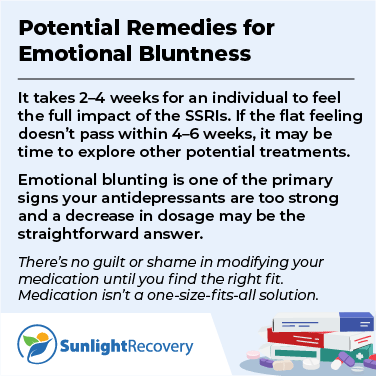
First, note that this flat feeling may be temporary. Many patients report having emotional blunting as an initial side effect that doesn’t last. In this case, your body just needs to rebalance as it’s getting help from the SSRIs.
If you just started your medication, your doctor may ask you to continue and come back for a checkup in a few weeks. On average, it takes between 2 and 4 weeks for an individual to feel the full impact of the SSRIs. If the flat feeling doesn’t pass within 4 to 6 weeks of taking the medication, it may be time to explore other potential treatments.
As is the case with treating most conditions, there are variations in the brands and types of medication that you can try. Your doctor may want to try another SSRI brand and see how you respond to the change. Alternatively, emotional blunting is one of the primary signs that your antidepressants are too strong. In this situation, a decrease in your medication dosage can often be the straightforward answer to eliminating the flat feeling side effect.
Lastly, SSRIs aren’t the only type of antidepressant available, but they’re the most popular because they’re thought to come with the fewest potential side effects. You may be one of the outlier patients who respond better to a non-SSRI antidepressant.
If you’re concerned about SSRI motivation loss, reach out. There’s no guilt or shame in modifying your medication until you find the right fit. Medication isn’t a one-size-fits-all solution; it needs to be prescribed at an individual level. But the goal is always the same: The medication should be an improvement compared to the situation you were in before taking it. Your doctor is used to working with patients to find the right antidepressant solution. Just be honest with them about what side effects you’re feeling so they can make adjustments as needed.
Frequently Asked Questions
How long does emotional blunting from SSRIs last?
The timeline may vary depending on your diagnosis, brain chemistry, prescription and dosage. Your doctor can tell you more about what to expect once you start taking antidepressants.
Can I switch antidepressants if I feel flat?
If you feel apathetic while taking SSRIs, your doctor may recommend a different medication that offers the same benefits with fewer side effects. However, everyone reacts to medication differently, so you might have to try a few options before finding the right prescription.
Is SSRI-induced apathy permanent?
Typically, SSRI-induced apathy is temporary. However, if the emotional blunting persists for several weeks, talk to your doctor. They might adjust your dose or prescribe a different medication.
Should I stop taking my antidepressant if I feel numb?
Stopping a medication without your doctor’s approval could lead to severe side effects. For this reason, always talk to your doctor before stopping or changing your medication regimen. They can help you find safe ways to deal with antidepressants and emotional blunting.
Depression Treatment at Sunlight Recovery
Sunlight Recovery offers dual-diagnosis care for individuals struggling with depression and substance use disorder. Typically, we start with a medically supervised detox before moving to residential treatment, which allows residents to stay at our facility while they take classes, talk to therapists, build relationships and find relief from substance use. If necessary, our team can verify your insurance and schedule you for admission. Call (855) 625-6684 or contact us today to learn more about our facility.