
Fentanyl’s appearance can take on many forms, but knowing what to look for can help when a family member has a problem.
In 2023, an estimated 828,000 people aged 12 or older misused prescription fentanyl or used illegally made fentanyl (IMF) in the past year, according to SAMHSA’s National Survey on Drug Use and Health. The majority of them — about 627,000 people — used illegally made fentanyl. Prescriptions are easy to identify when they come in labeled bottles, but illicit forms can be trickier. If you’ve found an unfamiliar substance in your loved one’s belongings and you suspect fentanyl, the immediate jolt of fear is usually followed by a need for answers. So, what does fentanyl look like? Visual identification is often the first step in helping a friend or family member get the help they need, and this guide can help.
What Does Fentanyl Look Like?
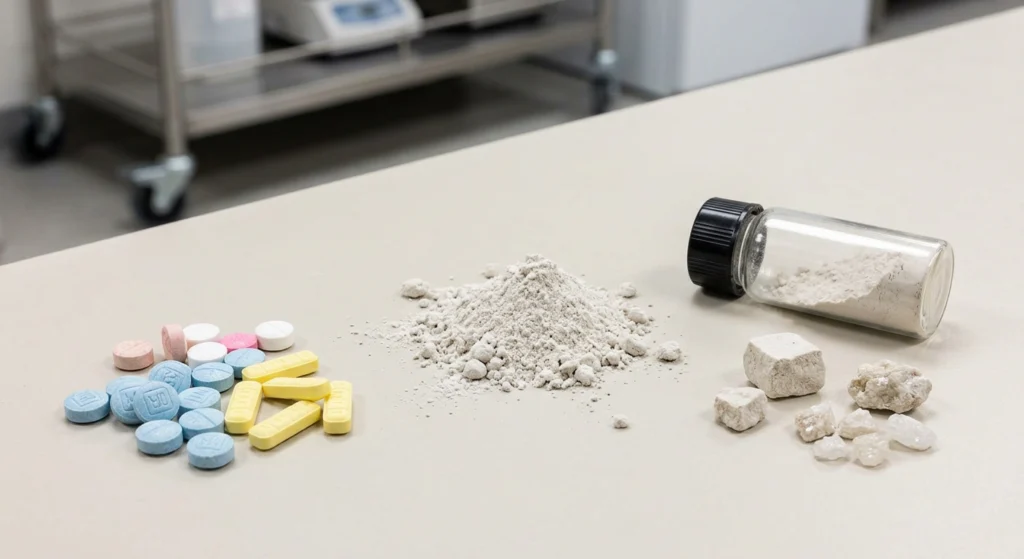
Example composite of fentanyl. It may be combined with colorful pills, or as a white to off-white poweder
Fentanyl is a synthetic opioid originally manufactured to alleviate pain in cancer patients. Compared to morphine, fentanyl is 50 to 100 times more potent. Because it’s manufactured legally for medical use and illegally for street use, fentanyl’s appearance can vary greatly depending on who makes it and what it’s used for.
Powder Fentanyl
Illegally sold fentanyl usually comes in a fine powder that resembles flour, baking soda or powdered sugar. It can also come in shades of brown or tan.
Fentanyl Pills
On the street, a wide range of fentanyl pills is available. They are made to look identical to legally manufactured prescription painkillers. Because they aren’t regulated, pills can vary in strength, which makes them extremely dangerous to take.
Fentanyl Patches
Transdermal patches are the most common legally manufactured form of fentanyl. They are clear or flesh-colored adhesive squares that look similar to nicotine patches or a small plastic bandage.
Liquid Fentanyl
In hospitals and other medical settings, fentanyl is a clear and odorless liquid used in IVs for sedation. On the street, liquid fentanyl is often packaged in small vials, as a nasal spray or dropped onto blotter papers.
Forms of Illicit Fentanyl on the Street
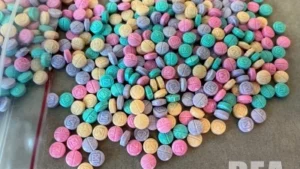
Per Department of Justice, they may use ‘Rainbow’ pills
Fentanyl is inexpensive to make, so drug traffickers often mix it with other substances to increase strength and raise profit margins. Illegal manufacturing results in multiple street forms of the drug.
- Rainbow fentanyl. Fentanyl dyed bright colors and pressed into pills, powder or blocks. The bright coloring is believed to be a branding tactic among traffickers.
- Bricks or rocks. Fentanyl powder is often pressed into bricks or rocks, making it easier to transport. These shapes are easy to crush back down into a powder for consumption.
- Laced products. Fentanyl is often mixed with cocaine, heroin and MDMA. Users may think they are taking another drug and unknowingly consume fentanyl.
Fentanyl Counterfeit Pills — What to Watch For
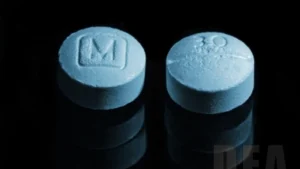
Per Department of Justice, Fake prescription pills known as M30s imitate Oxycodone and may appear light blue with an M on one side and 30 on the other.
The rise of counterfeit pills is one reason for the increase in fentanyl overdoses. The most common counterfeit is a small, light blue, circular pill stamped with an “M” on one side and “30” on the other. These pills are made to look like 30 mg of oxycodone. However, most of the street drugs with this identification are a combination of fentanyl and filler.
Warning signs of a counterfeit pill include:
- Inconsistent color. Counterfeit fentanyl pills often have an uneven blue or white color.
- Soft texture. Real pharmaceutical pills are hard and difficult to break. Counterfeit pills are chalky and easy to crush.
- Poor imprints. Imprints on fake pills look off-center, shallow or blurry compared to standard pharmacy-grade pills.
Fentanyl Compared to Heroin and Other Opioids
Fentanyl, heroin and other opioids belong to the same class of drugs, but they have distinct chemical and visual differences.
- Color. Heroin ranges in color from dark brown to black, a sticky substance known as black tar. Fentanyl is usually bright white or artificially colored.
- Potency vs. volume. A lethal dose of heroin is approximately the size of an eraser. Because fentanyl is far more potent, roughly 50 times stronger than heroin, a lethal dose can be as small as a few grains of salt.
- Smell. Heroin usually has a distinct vinegar-like smell, while fentanyl is odorless.
Why Visual Identification Is Difficult
Fentanyl can look like almost any other drug because it’s a synthetic powder that can be molded, dissolved into a liquid and dyed. Additionally, a very small amount can produce a fatal overdose, making it invisible when mixed into a bag of cocaine or other pills.
You can’t reliably see, smell or taste fentanyl. However, you can use chemical test strips to detect the drug if you’re unsure what a pill is or whether it contains any amount of fentanyl.
What to Do if You Suspect Fentanyl Exposure
If you find a pill or substance you suspect is fentanyl, it’s important not to touch it with your bare hands or attempt to smell it. Casual skin contact is unlikely to cause harm, but you do risk inhaling airborne powders.
If you suspect someone has overdosed:
- Call 911 immediately. Inform the operator that you suspect someone has overdosed.
- Administer Narcan (naloxone). If you have access to Narcan, use it. Narcan is a nasal spray that reverses the effects of an opioid overdose. If the individual isn’t overdosing, a dose of Narcan won’t hurt them.
- Stay with them. Try to keep the person awake until help arrives.
Fentanyl Addiction Treatment at Sunlight Recovery
If you or a loved one is struggling with fentanyl addiction, it’s time to take action. At Sunlight Recovery, we offer a range of services to help. Our programs include:
- Medically supervised detox. Our detox program offers safe, around-the-clock management of withdrawal symptoms.
- Residential treatment. Our residential program delivers a safe and supportive environment to break the cycle of addiction.
- Individual and group therapy. Individual and group therapy help address the underlying causes of addiction.
- Family support groups. Family groups help teach loved ones how to support an individual struggling with addiction.
Frequently Asked Questions
What percent of street drugs contain fentanyl?
Testing samples suggest that approximately 12 to 15% of powdered street drugs contain fentanyl.
Can you overdose by touching fentanyl?
Casual skin contact with fentanyl is very unlikely to cause an overdose, despite common fears. The real risks come from ingesting it or inhaling airborne powder. Even so, it’s safest not to handle a substance you suspect is fentanyl with your bare hands.
Which states report the most fentanyl overdose deaths?
The states reporting the highest total numbers of fentanyl overdose deaths tend to be the most populous, including California, Florida and New York.
Is it possible to recover from fentanyl addiction?
Recovery is a long process, but it’s possible with the right support and treatment.
Take the First Step Toward Recovery
Understanding what fentanyl looks like is often one of the first steps in identifying misuse. If you or a loved one is struggling with addiction, call Sunlight Recovery at (855) 625-6684 or get in touch to speak with one of our caring staff members. We can walk you through your options and help you get started today.