
Powder cocaine usually looks like a fine, white, crumbly powder, similar to flour or powdered sugar. Crack cocaine looks like small, hard, off-white or yellowish rocks. Both forms can be cut with other substances, which is one reason appearance alone isn’t a reliable way to know what a substance is.
If you suspect that a loved one is using cocaine, you may be wondering, “What does cocaine look like?” and “How can I help my family member?” While no approach works for everyone, learning the signs of cocaine use is an essential starting point. Afterward, you can reach out to Sunlight Recovery to discuss your next steps.
A note before you continue: this page includes images of cocaine. If images of drugs may be a trigger for you, the photos below are hidden until you choose to view them.
What Does Cocaine Look Like?
Cocaine comes in a few varieties that allow people to consume the drug in different ways. Knowing the differences between crack vs powder cocaine makes the drugs easier to spot.
Powder Cocaine
Powder cocaine has a white color and a crumbly, powdery texture. Typically, you’ll find this drug in small plastic bags. Most people carry small amounts of powder cocaine unless they’re selling or manufacturing the drug.
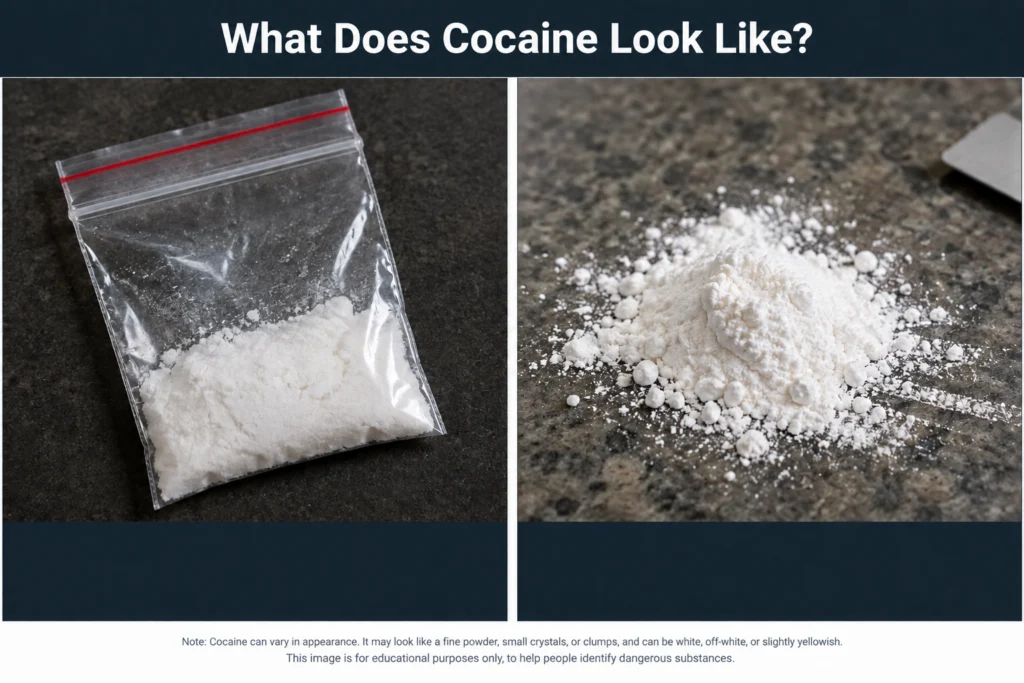
Illustrative composite image.
Crack Cocaine
Crack cocaine has a white or yellowish color and a solid texture that resembles small rocks. Dealers usually wrap the rocks in plastic before selling them. Finding cocaine in bricks is rare unless the individual is trafficking large amounts of the drug.
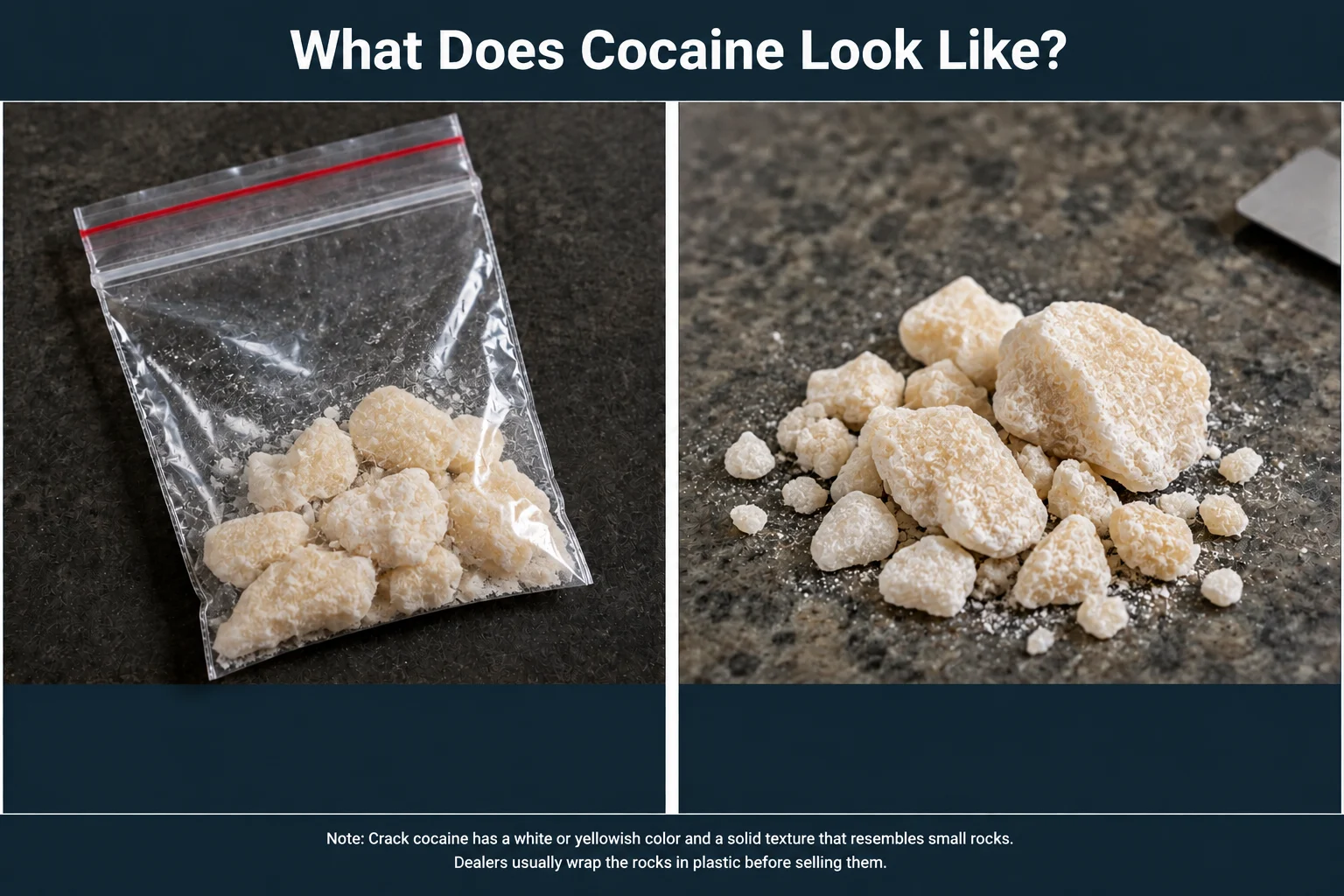
Illustrative composite image.
Key Visual Differences Between Powder and Crack
The main difference is that powdered cocaine has a light, crumbly texture, while crack looks like solid rocks. Powder also has a matte white appearance, while crack rock may be off-white or yellowish, with a hard, waxy or porous look. The powder form makes it easier for dealers to mix in crushed pills or fentanyl, which can make the drug far deadlier.
Common Paraphernalia for Each
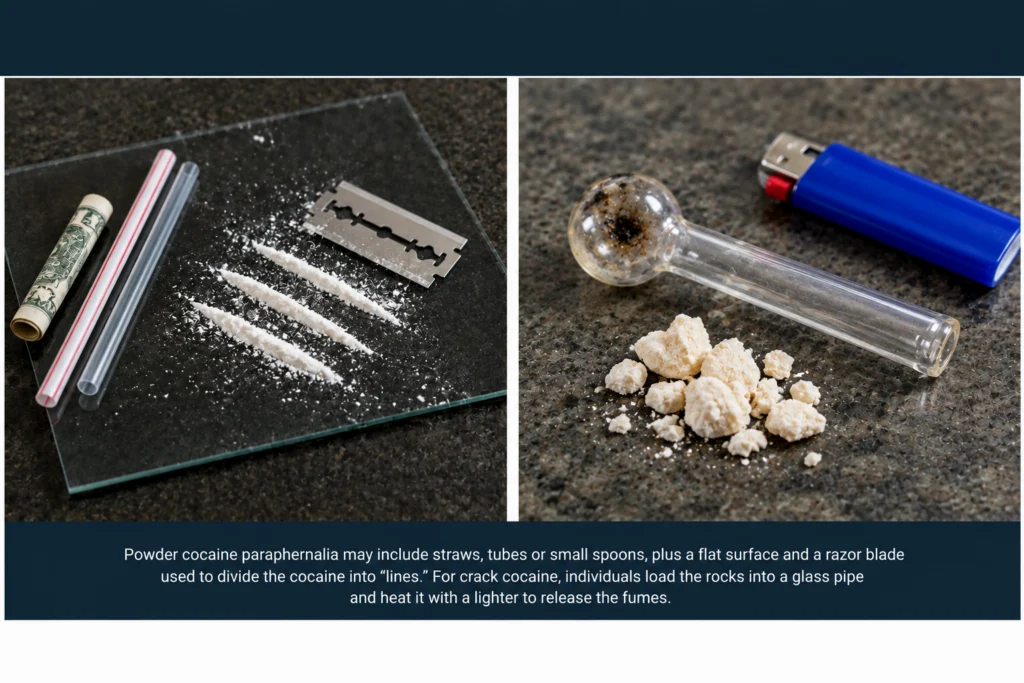
Typically, people who use powder cocaine snort the drug or mix it with water and inject it directly into their bloodstream. As a result, powder cocaine paraphernalia may include straws, tubes or small spoons, plus a flat surface and a razor blade used to divide the cocaine into “lines.” For crack cocaine, individuals load the rocks into a glass pipe and heat it with a lighter to release the fumes.
Illustrative composite image.
Signs of Recent Use
Cocaine is a stimulant that may cause temporary feelings of energy, excitement or euphoria. An individual who’s recently used cocaine may exhibit these behaviors:
- Paranoia
- Anxiety
- Aggression
- Irritability
- Restlessness
A high dose could result in violent, destructive or unpredictable behavior that endangers the individual and the people around them. Once the “high” wears off, the individual may experience cravings and withdrawal symptoms until they use more of the substance. A medically supervised detox can make withdrawal safer and more manageable than trying to stop alone at home.
Over time, regular cocaine use could lead to coughing, nosebleeds, asthma, loss of smell and difficulty breathing or swallowing. People who inject cocaine may experience scarring or skin infections. If they share needles with other people, they could contract HIV, hepatitis C and other diseases.
Regular cocaine use can develop into a substance use disorder, which can slowly take over a person’s life as cravings grow stronger. They may lose their job, give up on school, strain their relationships and put themselves in dangerous situations. At that point, professional treatment can help.
Why Visual Identification Is Often Unreliable
Many people struggle to identify cocaine because the substance looks like a harmless white powder, such as flour or sugar. Looking for paraphernalia is also tricky. Most people use basic household items, and your loved one could easily explain why they keep straws or razor blades in their bedroom. Crack pipes are easier to identify, but many people snort cocaine instead of smoking it.
This doesn’t mean that cocaine is impossible to identify. However, if you’re not sure, consider reaching out to Sunlight Recovery before confronting the individual. Our team can answer your questions and help you approach the situation with more confidence.
What to Do if You Find Cocaine in Your Home
Avoid touching, smelling or tasting the substance, since street drugs may be contaminated with fentanyl. Then reach out to Sunlight Recovery. When you call our confidential admissions line, our team can talk through what you found and your next steps. We can also discuss treatment programs for your loved one, including residential care, group therapy, individual therapy and medication management.
Afterward, talk to your loved one about the situation. Let them know that you care about them and you’ve researched treatment options. They might argue or claim that the drugs belong to someone else, but it’s important to stand firm. Your loved one needs your support as they navigate the next steps in their journey.
Cocaine Addiction Treatment at Sunlight Recovery
Cocaine addiction treatment at Sunlight Recovery often begins with a medically supervised detox. While the cocaine leaves the body, patients receive medical care that helps them manage withdrawal symptoms and reduce the risk of complications. Afterward, they can begin our residential program in Boca Raton, where the length of stay depends on each person’s needs.
During treatment, patients receive a personalized plan that includes group therapy, individual therapy, meditation and experiential therapies, medication management and medical oversight. After residential care, many move to outpatient care, which allows them to continue therapy while living at home.
Frequently Asked Questions
What does cocaine look like?
In powder form, cocaine looks like a white powder that resembles flour or sugar. Crack cocaine looks like small, hard, off-white or yellowish rocks. If you suspect that you’ve found cocaine in your house, avoid touching the substance and call a treatment provider to talk through your next steps.
How do you know if someone is using cocaine?
Common signs of cocaine use include restlessness, irritability, aggression, paranoia and nosebleeds. You might find drug paraphernalia, such as straws, razor blades or small spoons, in their belongings. As their use continues, they may display erratic or dangerous behavior. Over time, cocaine use may cause seizures, asthma, heart attacks, strokes and scarring from needle injections.
Where can you get help for cocaine addiction?
Sunlight Recovery offers help for cocaine addiction and other substance use disorders. Treatment often starts with medically supervised detox, followed by a residential program that includes therapy and medical care. After completing residential treatment, many people move to outpatient care, which allows them to continue therapy while resuming their daily lives.
Start Your Treatment Journey
If you or a loved one is struggling with cocaine addiction, Sunlight Recovery is available 24/7 to answer your questions, verify your insurance and help you begin admissions. Our confidential line is available to everyone, including friends, family members and prospective patients. Call our 24/7 admissions line at (855) 625-6684 or contact us to discuss our programs and find the right treatment plan. Every call is confidential, with no obligation.